State · 1978–1979
The Iranian Revolution
Tehran (Iran)
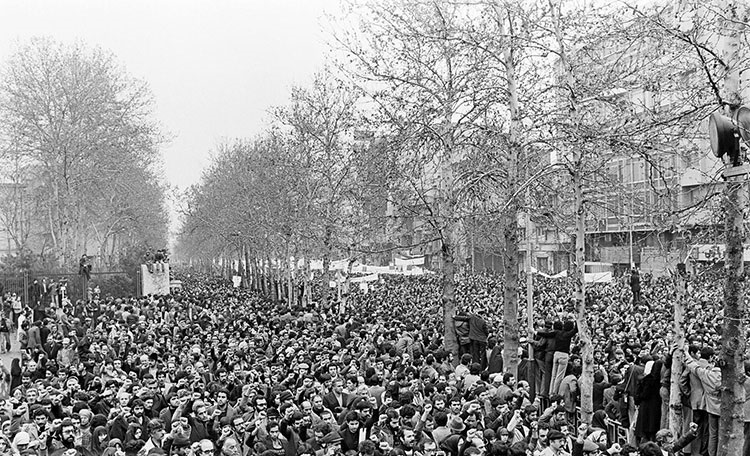
Protests against Shah Mohammad Reza Pahlavi, whose rule many Iranians saw as corrupt, repressive and too dependent on the United States, began in January 1978 after a government-planted newspaper article attacked the exiled cleric Ayatollah Ruhollah Khomeini, and grew into a broad uprising of clerics, liberal nationalists and leftists whose strikes and mass demonstrations paralysed the country. The Shah left Iran on 16 January 1979, Khomeini returned on 1 February to a welcome by several million people, and on 11 February the army declared itself neutral and the monarchy fell.
After a referendum in March 1979 Iran became an Islamic Republic, and a new constitution approved in December 1979 made Khomeini its Supreme Leader.
Why it mattered
The revolution replaced a pro-Western monarchy with a theocratic republic built on Khomeini's doctrine of guardianship of the Islamic jurist (velayat-e faqih), and the seizure of the US embassy in Tehran on 4 November 1979, when 52 Americans were held hostage for 444 days, caused a lasting rupture between Iran and the United States.
Elsewhere
The death toll is disputed: the Islamic Republic cites 60,000 "martyrs", but historians' estimates for January 1978 to February 1979 are far lower, from about 500 to 3,000.
Related
- The world in 1960: The Year of Africa chapter
- Soviet–Afghan War previous moment · 1979–1989
- Fall of the Berlin Wall next moment · 1989